2026 Pipe-Profit Reset: Budget Reset Newsletter Plumbing (Week3)
Monday morning.
Two leak calls.
One sewer backup.
A water heater swap.
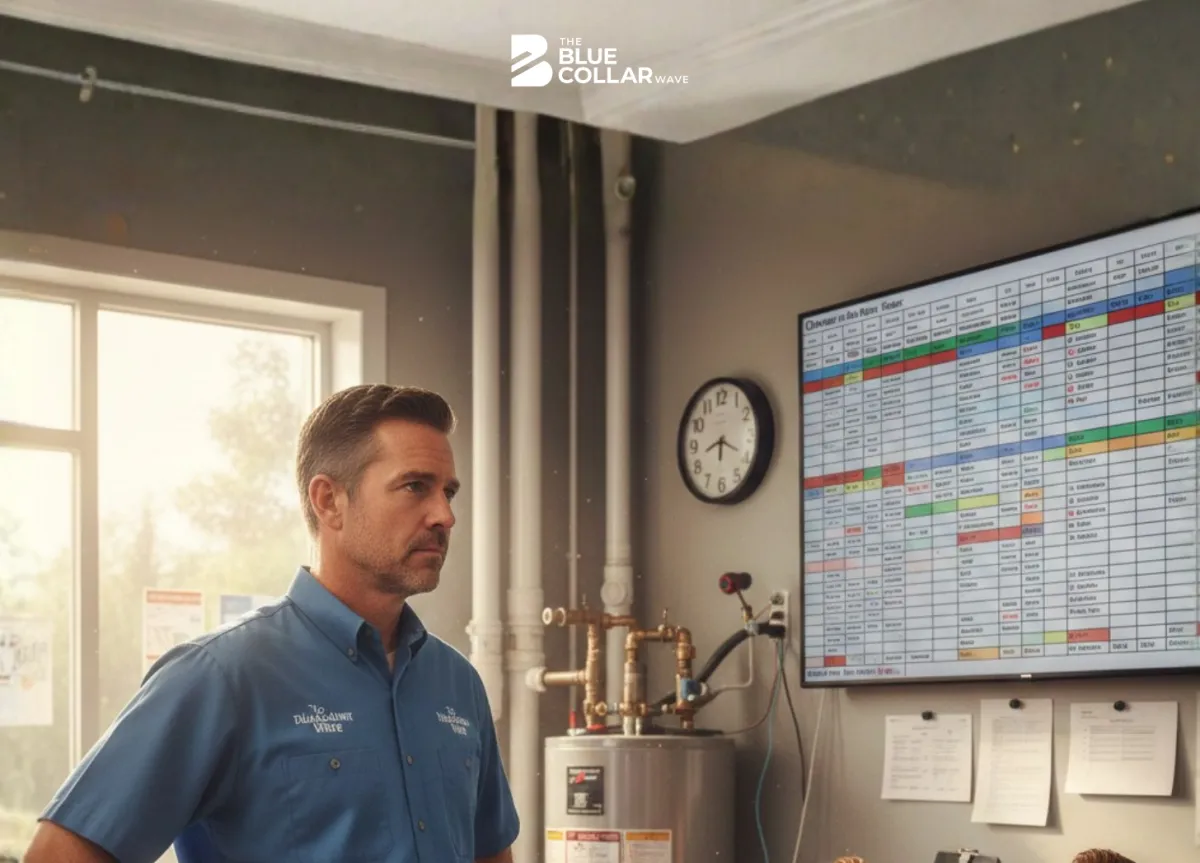
The board looks full.
Your techs look tired.
And you already feel overtime forming.
Dispatch says, “We’re slammed.”
But your margin says, “Not really.”
Then the worst part:
You’re busy… and still behind.
More calls won’t fix this. Capacity will.
Today we build a labor + capacity plan that protects profit.
Series Context
Over the next five weeks, we’re exploring “2026 Pipe-Profit Reset”, a simple operator system to turn plumbing chaos into cash, control, and free time.
Week 1: Budget Reset ✓
Week 2: Weekly Cash-Flow Forecast ✓
Week 3: Labor + Capacity Plan (Today)
Week 4: Pricing + Gross Margin Guardrails
Week 5: Scorecard + Cadence That Sticks
What You’re Going to Learn Today
How to plan labor weekly so you stop buying profit with overtime and underbooking
Why it matters now:Overtime eats your best weeks 🤯
Underbooked days burn payroll you can’t get back
A real plan tells you when to hire, train, market harder, or raise prices
Why Most People Get This Wrong
Most plumbing shops “plan” by reacting.
They schedule whoever yells loudest.
They cram the board.
They hope it all works out.
That’s not planning.
That’s survival.
The villain: reactive scheduling.
The Truth About Labor + Capacity Planning
Labor is your biggest cost—and your biggest lever.
You don’t “get” capacity.
You build it.
With three numbers:
available hours, sold hours, and profit-per-hour.
Key Principles (3–5)
Know Your Sellable Hours
Why it matters: turns “busy” into a number you can control
Do this: tech hours × utilization target = sellable hours (weekly)
Avoid this: assuming 40 hours = 40 billable ✅
Separate Work Types: Service vs. Drain vs. Install
Why it matters: stops low-margin chaos from stealing prime time
Do this: reserve weekly blocks by type (protect them like appointments)
Avoid this: “we’ll squeeze drains in anywhere” (they explode the schedule)
Set an Overtime Trigger
Why it matters: overtime should be a decision, not a surprise
Do this: if booked hours exceed capacity by X%, trigger a play (triage, price, reschedule, sub)
Avoid this: letting Friday force your hand
Track Profit Per Labor Hour
Why it matters: fixes the real issue—wrong work consuming best hours
Do this: rank your top job types by profit/hour and prioritize them
Avoid this: filling the board with “anything” just to feel busy
Your Action Plan (5 days)
Day 1: Calculate sellable hours, Know true capacity, Tip: pick a realistic utilization target
Day 2: Block service/drain/install time, Protect the schedule, Tip: schedule highest-profit first
Day 3: Define OT trigger + response, Stop surprise overtime, Tip: pre-decide the play
Day 4: Rank jobs by profit/hour, Sell smarter, Tip: push winners, pause losers
Day 5: Add weekly labor review, Keep it tight, Tip: 15 minutes, same day as cash review 📌
Common Objections Handled (2–4)
“Plumbing demand is unpredictable.” → Exactly. Unpredictable demand needs predictable triggers and weekly planning.
“My guys won’t like being ‘blocked.’” → They hate chaos more. Blocks reduce whiplash and protect their time.
“We just need more techs.” → Maybe. But plan first. Many shops “find” capacity by fixing utilization and job mix.
The Bottom Line
Busy isn’t the goal.
Profitable is.
Most owners sell whatever shows up.
Winners protect capacity and sell the work that pays.
Do-this-now: Calculate sellable hours and set an overtime trigger with a pre-decided response this week. 🔧
Coming Next Week
Pricing + gross margin guardrails—so your team stops negotiating with your profit.
Your Next Step
If you want labor to stop feeling like chaos, you need a weekly cadence with clear capacity, blocks, and triggers.
That’s how you scale without burning out.
thebluecollarwave.com/growth-room
More resources at thebluecollarwave.com
To your next level of profit,
Jim Cosmas
thebluecollarwave.com